
 When we enter the flavor world of coffee we first need to dive into regions. In this first part of our 5 part series we are going to discuss:
- What the Coffee Bean Belt is.
- The 3 major regions associated with the Bean Belt
- A flavor wheel and how to read it
- What 6 things each of those regions need to grow coffee.
What is the Coffee Belt?
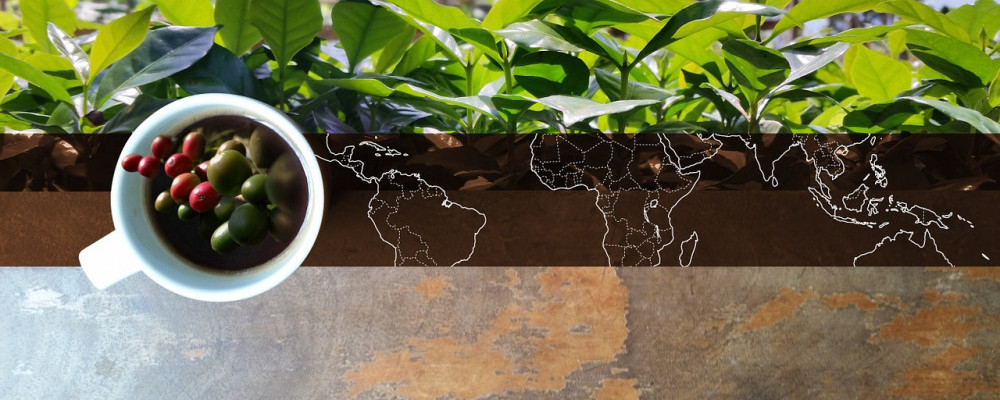
What’s the amount of coffee you drink on a daily basis? A weekly basis? According to the site coffeeaffection.com, 517 million cups of coffee are consumed daily in the USA alone. In addition, roughly 160 million bags of coffee are produced each year. That’s a lot of coffee consumed, by just one country – these statistics don’t include the rest of the globe, so its only rightful to say that we as a collective, consume much more than what the US takes in daily – estimated it is about 2 billion cups daily worldwide. If you’re like most people, you probably haven’t actually thought about where all that coffee comes from. Of all the coffee drank and produced, it is all grown in an area known as the Coffee Bean Belt. This invisible area runs 3,200 miles, covers 70 countries – only 44 produce coffee, 23.5 degrees south and north of the equator, and has the tropical climates ideal for the perfect conditions for the growth of coffee. Inside of this Coffee Bean Belt you can narrow it all down to 3 specific regions.
3 Regions of Coffee
Depending on what region you are in, it can affect the overall distinct tasting notes of the coffee being produced. We can narrow all countries down to these three specific regions, which all lie within tropical and subtropical climates and growing regions of 800-2000 meters above sea level:
- Central and South America
- Africa and The Middle East
- Southeast Asia
Of the countries that produce coffee yearly the top 5 are as follows:
- Brazil – 63.4 million (60 kg bags)
- Vietnam – 29 million (60 kg bags)
- Columbia – 14.3 million (60 kg bags)
- Indonesia -12 million (60 kg bags)
- Ethiopia – 7.3 million (60 kg bags)
DATA! DATA! DATA!, but you didn’t come here for just data and statistics – you came here to figure out what the regions have to do with the flavor of the coffee you drink. OK, continue with me here. Depending on where the coffee is grown on the Coffee Bean Belt, the coffee will have their own distinct flavors due to 6 things, all of which add their own uniqueness depending on the geographical location.
6 Regional Things That Impact Flavor.
- Soil chemistry
- Weather
- Sunshine
- Rainfall
- Altitude
- Processing methods
Coffee, before it is a liquid in your cup, before its a bean, before it is unroasted, it is the seed of a fruit. Just like any fruit or vegetation, coffee is at its best depending on its region and what time of the year it is harvested. Depending on when the coffee is grown and harvested these 6 regional things can be different. In short, coffees produced in northern regions have the ideal 6 at their peakness during early summer to fall. For southern regions, flavor profiles are at best from early winter to spring. So, what do the 3 regions cover? I won’t go over all of them, but I will keep it basic for easier reading.
Central and South America Regions
- Central American
-
- Guatamala
- Nicaragua
- El Salvador
- Honduras
- Costa Rica
Coffees within this region will have a well-balanced, medium-bodied, mild to medium acidity, clean, and bright flavor profile.
- South American
-
- Brazil (the largest coffee producer)
- Colombia
- Equador
Coffee within this region will have a mild-bodied, creamier, and chocolate aftertaste profile.
Africa and the Middle East Regions
- Africa
-
- Ethiopia (3% of all coffee is produced here)
- Kenya
- Tanzania
- Rwanda
- Burundi
- Uganda
Coffee within this region will have a sweet, fruity, delicate floral, and full-bodied profile.
- Middle East
-
- Yemen
Coffee within this region will have a similar profile as Ethiopian coffee – bright, full-bodied, and spicy.
SIDE NOTE: This list may seem small, but its believed that coffee was discovered in Ethiopia and then carried to Yemen by African slaves. In the 1400s the Sufis made a tea with the coffee cherries, called “quishr” or “Arabian wine” that helped them stay awake during nightly prayers. Eventually, word spread and pre-modern coffee houses opened, called “schools for the wise” where only men traders and scholars could drink and interact freely. Arabs become so protective of their coffee that they boiled their beans so no one else could cultivate them. However, in the early 1600s a Sufi smuggled seeds from Yemen to India. During this same time a Dutch trader smuggled seeds from Yemen and planted them in Amsterdam. Within a few hundred years, coffee which started from Ethiopia to Yemen spread and become a global commodity.
Southeast Asian Regions
- Southeast Asia
-
- Vietnam (second largest coffee exporter)
- Indonesia, which include the Islands of”
-
- Sulawesi
- Java
- Sumatra
Coffee from Vietnam will have a mild, delicate-flavored, and medium-bodied profile
Coffee from Indonesia will have a distinct full-bodied, rich, earthy, juicy, and nutty profile.
A Flavor Wheel and How to Read It
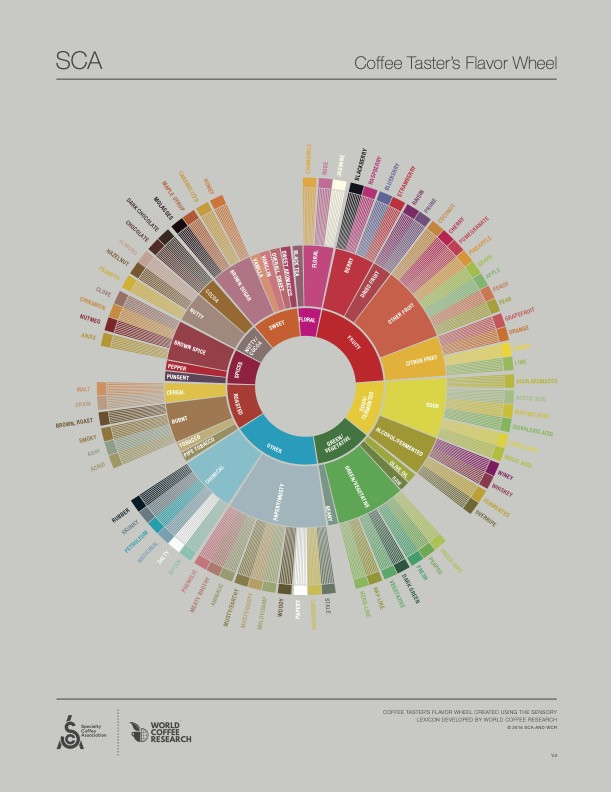
In a very short time we have covered a very significant amount of information, but this information is best when we can actually begin to apply it to our everyday coffee drinking. Just like with wine, the world of coffee has its own flavor wheel that help us notice and discover new profiles within the coffee we are drinking.
Here are some simple rules to using a coffee flavor wheel:
- Pour your cup of coffee and breathe through your nose. Start noticing what you pick up, is it nuts? If so what kind of nuts can you distinguish? Hazelnuts, peanuts, or almonds?
- Take a sip as you are looking at the wheel. Do you notice fruity notes? What about spicy notes? Identify broad groups, such as fruit, and then move that into smaller sub-categories like stone fruit, citrus, lemon, or grapefruit.
- Take another sip. This time we are paying attention to the acidity. Acidity adds freshness. Do you find that the flavors are bright, intense, mellow, or flat?
- Focus on the texture of the coffee. Is it delicate? Buttery? Thick? Gritty?
- Swallow and notice the aftertaste of the coffee in your mouth. Is it neutral? Bitter? Unpleasant? Soft?
Do this periodically with different roasts of coffee and shortly before you know it you will become a “coffee tasting expert.”
Conclusion
In this first part of our 5-part series, we discussed what the coffee bean belt is, the main regions associated with coffee production, the 6 vital elements that contribute to coffee profiles, and were introduced to a coffee flavor wheel and how to rid and use it.
In the next part of our series we will be discussing how the flavor of coffee is impacted by variety.
If you have any questions about this topic or have a topic you would like for me to discuss or an idea for a How-To, please comment below or send an email.
Happy Brewing,
Corey J. Plummer