
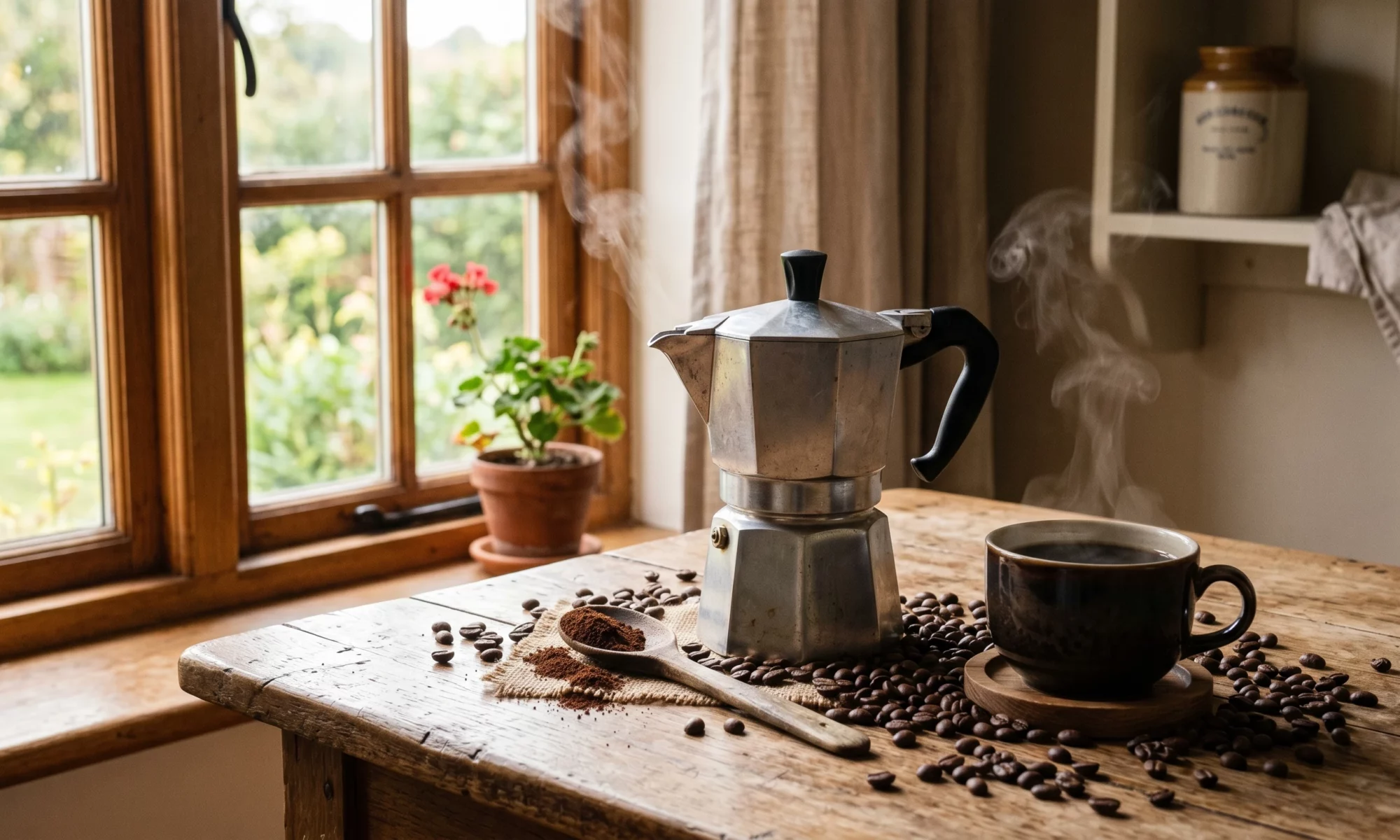
How To Use a Moka Pot for Beginners
Making coffee with a Moka pot can feel like a little adventure, especially if you’re new to home brewing. The process is super approachable and delivers those bold, rich flavors that fans of Italian coffee love. If you haven’t tried brewing with one yet, or you’re just getting started, this guide covers everything a beginner needs to know, from the history of this iconic pot to step-by-step instructions you can use right now. Plus, you’ll find out why Moka pots remain one of the most popular and dependable ways to make eye-catching Italian coffee at home.
The Story Behind the Moka Pot
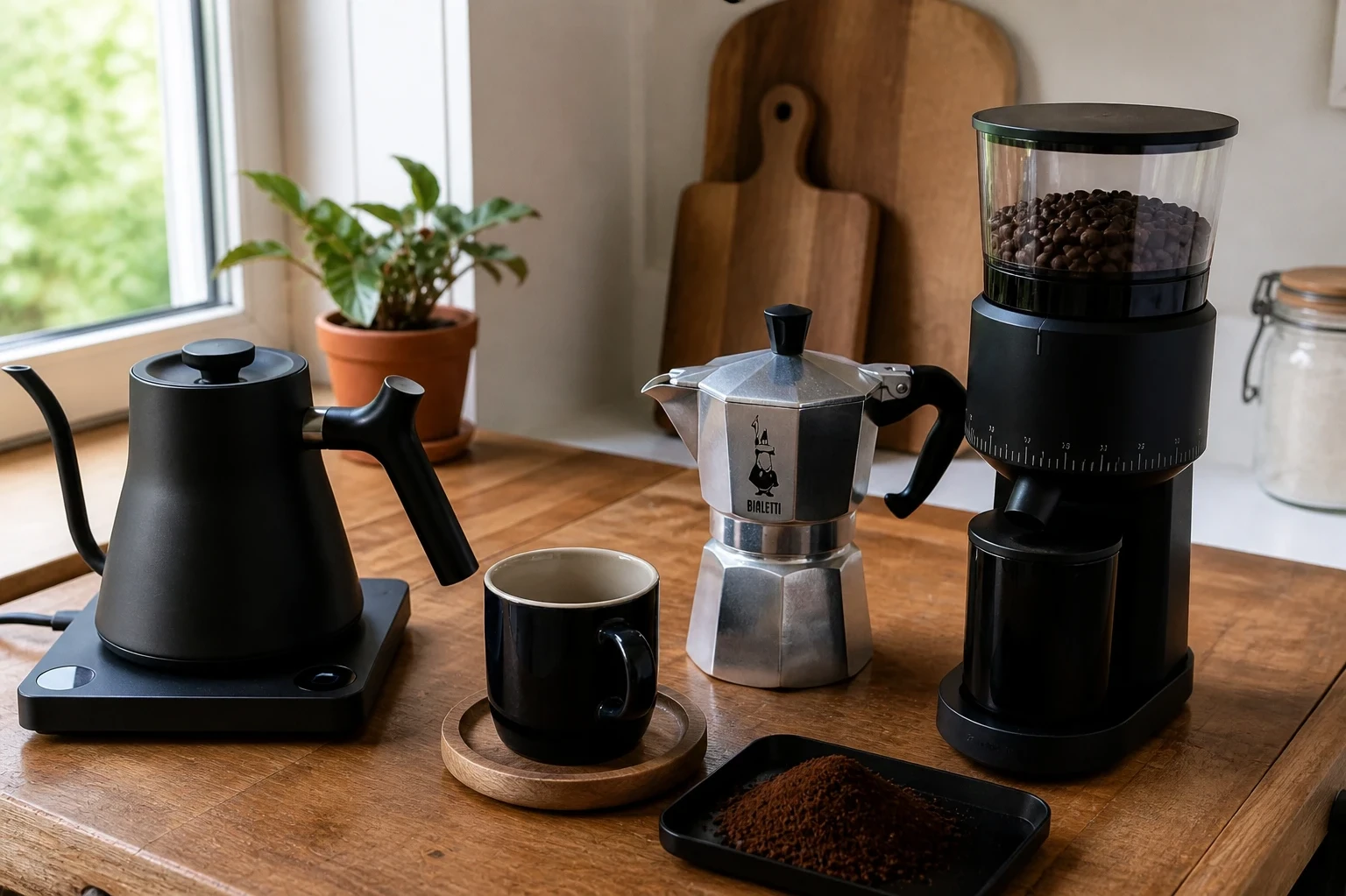
The Moka pot is one of those kitchen gadgets that feels like it’s always been around. Turns out, it’s almost a century old! Invented in 1933 by Alfonso Bialetti and designed by Luigi De Ponti, the original Moka Express was made to let anyone brew strong, concentrated coffee at home, without a pricey espresso machine. The real game changer was using steam pressure to extract all that deep flavor.
After World War II, the Moka pot rose in popularity. Mass production and clever marketing (especially by Bialetti’s son, Renato) made it a must-have in Italian households and eventually, kitchens around the globe. The brand’s cartoon mascot—a little man with a mustache—was put out there in 1953 and is still linked with Italian coffee culture today.
These days, the Moka Express isn’t just found in millions of homes; it’s also on display in top design museums in Milan and New York. Its octagonal shape and lightweight aluminum body still look cool, and it’s just as practical as ever.
Moka Pot Basics: What Makes It Unique?
- Octagonal Aluminum Body: It’s not just for looks. This shape helps with durability and better heat distribution.
- Steam Pressure Brewing: The Moka pot makes coffee by forcing hot steam through ground coffee. The result is a strong cup that’s less intense than espresso, but definitely more robust than regular drip coffee.
- Home Friendly: Designed for easy use in any kitchen. No fancy equipment required.
Types of Moka Pots
Moka pots might look similar at first glance, but there’s actually a bit of variety. Picking the right one comes down to your stove, taste, and budget. Here’s a quick rundown:
- Classic Aluminum Moka Pot: This is the oldschool version, like the Bialetti Moka Express. It’s affordable, lightweight, and perfect for gas or electric stoves.
- Stainless Steel Versions: These are super durable and work for induction cooktops (think Bialetti Venus or similar models). They’re heavier and often have a sleeker look.
- Electric Moka Pots: These take the guesswork out by handling the heat level for you. Plug them in anywhere; helpful if you don’t use a stovetop often.
Pick whichever style fits your kitchen and brewing style best. For most beginners, a classic six cup aluminum pot is a reliable place to start, as it gives you enough coffee for sharing and is forgiving if you’re practicing your technique.
Here is Your Moka Pot Brewing Guide (Beginner Friendly Steps)
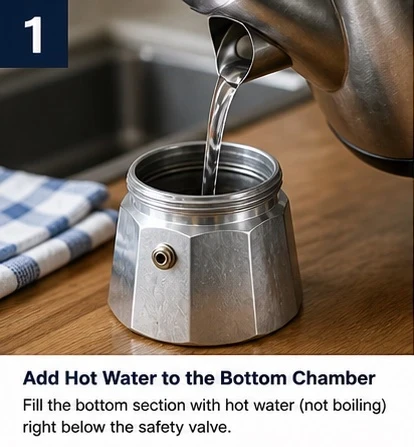
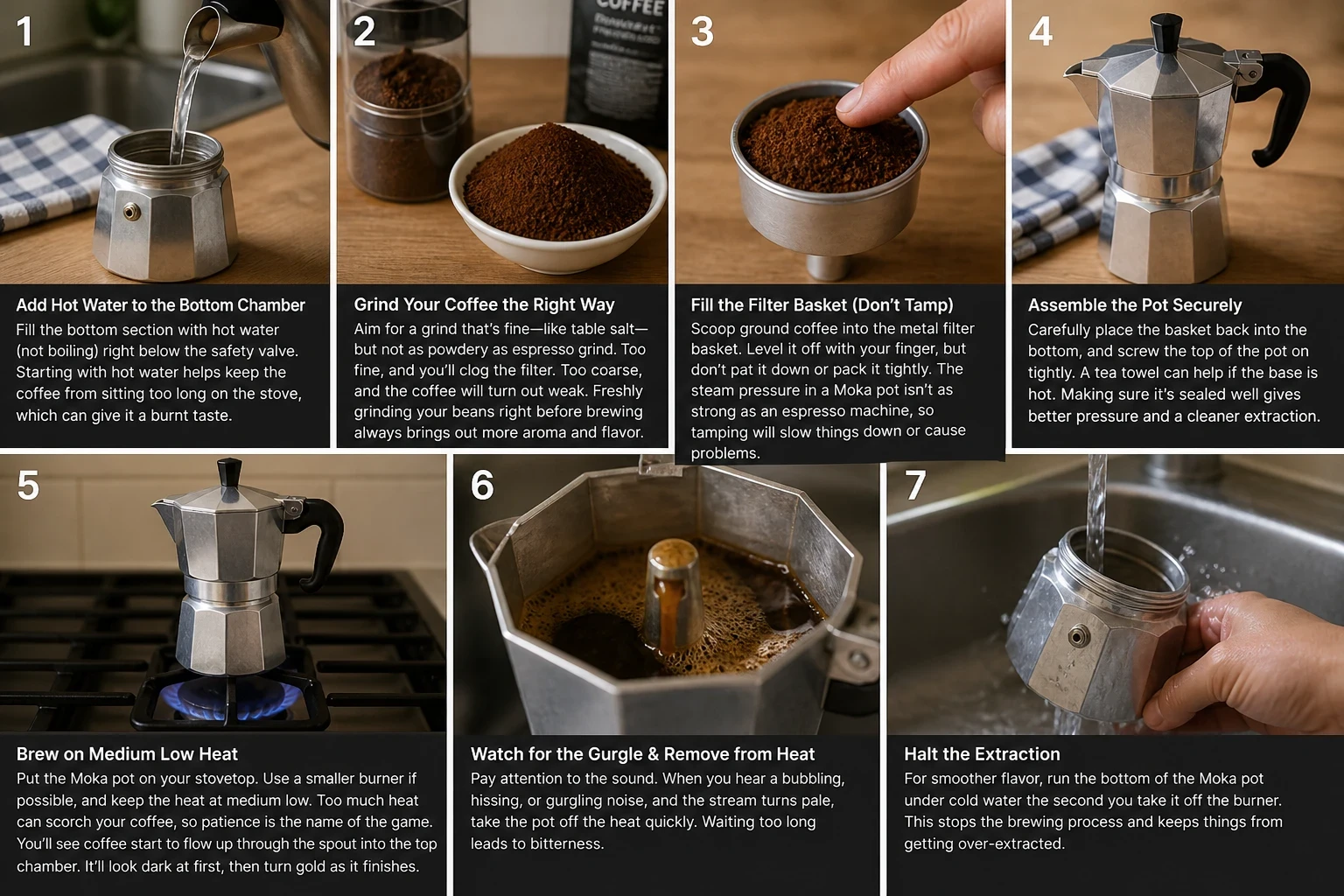
1. Add Hot Water to the Bottom Chamber
Fill the bottom section with hot water (not boiling) right below the safety valve. Starting with hot water helps keep the coffee from sitting too long on the stove, which can give it a burnt taste.
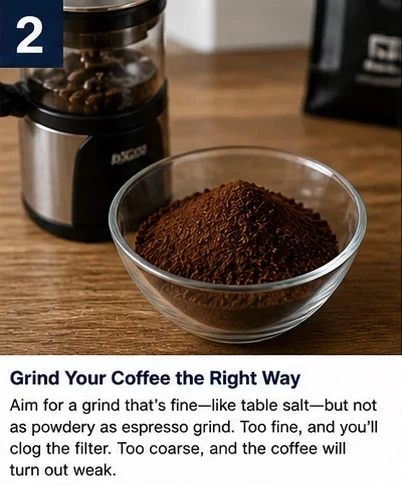
2. Grind Your Coffee the Right Way
Aim for a grind that’s fine—like table salt—but not as powdery as espresso grind. Too fine, and you’ll clog the filter. Too coarse, and the coffee will turn out weak. Freshly grinding your beans right before brewing always brings out more aroma and flavor.
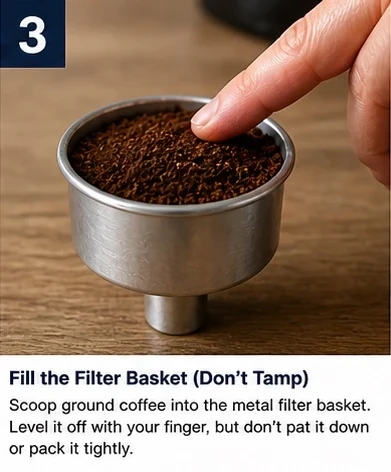
3. Fill the Filter Basket (Don’t Tamp)
Scoop ground coffee into the metal filter basket. Level it off with your finger, but don’t pat it down or pack it tightly. The steam pressure in a Moka pot isn’t as strong as an espresso machine, so tamping will slow things down or cause problems.
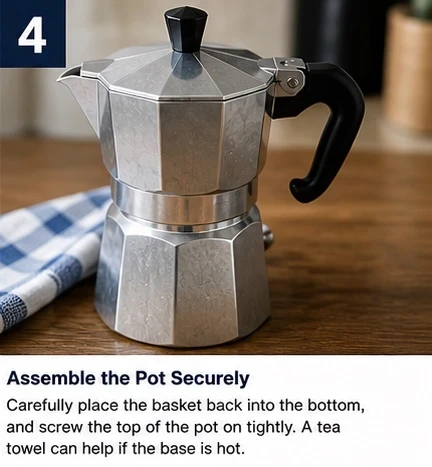
4. Assemble the Pot Securely
Carefully place the basket back into the bottom, and screw the top of the pot on tightly. A tea towel can help if the base is hot. Making sure it’s sealed well gives better pressure and a cleaner extraction.
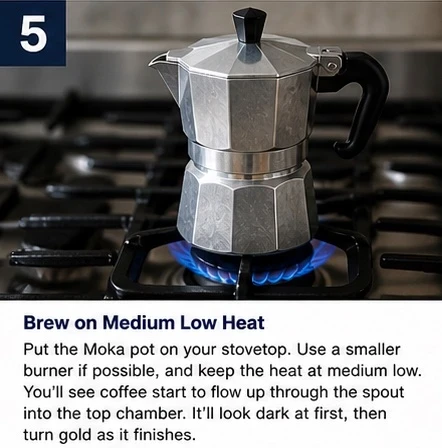
5. Brew on Medium Low Heat
Put the Moka pot on your stovetop. Use a smaller burner if possible, and keep the heat at medium low. Too much heat can scorch your coffee, so patience is the name of the game. You’ll see coffee start to flow up through the spout into the top chamber. It’ll look dark at first, then turn gold as it finishes.
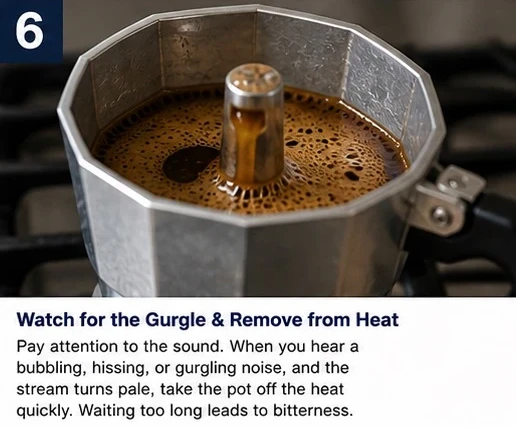
6. Watch for the Gurgle & Remove from Heat
Pay attention to the sound. When you hear a bubbling, hissing, or gurgling noise, and the stream turns pale, take the pot off the heat quickly. Waiting too long leads to bitterness.
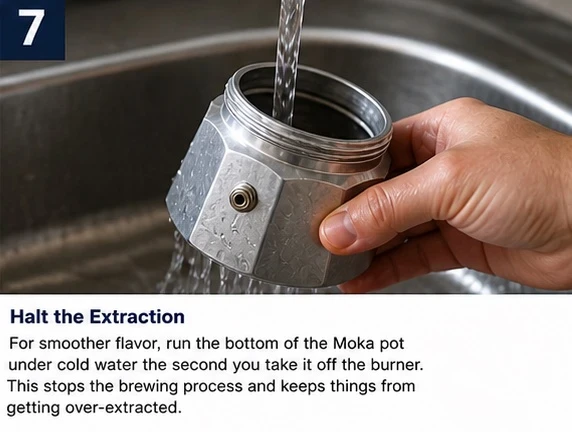
7. Halt the Extraction
For smoother flavor, run the bottom of the Moka pot under cold water the second you take it off the burner. This stops the brewing process and keeps things from getting over-extracted.
Easy Tips for Better Moka Pot Coffee
- Watch Your Heat: Always use low to medium heat. It’s important for avoiding burnt, harsh tasting coffee.
- Clean Gently: Rinse your pot with warm water. Skip the dish soap; residue can stick around and mess with the flavor over time. Dry it thoroughly before you store or reassemble.
- Try a Paper Filter: Some folks slip a paper filter (like from an AeroPress) on top of the grounds. This keeps sediment out and delivers a cleaner cup.
- Practice Makes Perfect: Your first brew might not be amazing, but you’ll get better every time. Consistency will come with a bit of practice, so don’t give up after the first try.
Popular Moka Pots for Beginners
- Bialetti Moka Express: The classic choice; hard to go wrong with this one. It’s widely available, durable, and pretty affordable for what you get.
- Bialetti Venus: If you have an induction hob or want a pot that’s sturdy and simple, this one’s worth checking out. Some coffee fans appreciate its stainless steel build and sleek lines, and it’s easy to clean too.
Beginner Mistake: Too Much Heat
A lot of new users crank up the heat for faster coffee. But this only burns the grounds and can actually damage your pot. Stick with gentle heat and patience for much better results every time.
Frequently Asked Moka Pot Questions
How do I know when to take the Moka pot off the stove?
Listen for bubbling and hissing sounds, and watch as the stream of coffee goes from dark to light. Remove from heat as soon as the color fades and the noise picks up.
Can I use pre ground coffee from the store?
You can, but most packaged grounds are made for drip machines and are a bit coarse. If possible, use a burr grinder and grind right before brewing. Your taste buds will notice the difference.
Is Moka pot coffee the same as espresso?
No, but it’s close. Moka pot coffee is strong, but doesn’t have the same crema or intense pressure extraction as real espresso machines. Still, it definitely gets you that bold coffee kick many people love.
Give Moka Pot Brewing a Try!
Brewing with a Moka pot is a fun way to get into the world of stronger coffee without breaking the bank or needing complicated equipment. I love the ritual, and the taste, every single morning. If you’ve been thinking about giving it a shot, this is your sign. Grab a pot, some fresh coffee, and enjoy the process. Feel free to share any questions or your own Moka pot stories below. I’m always here for more coffee talk!
If you want to step up your at home coffee game, the Moka pot is a fantastic place to start. You’ll soon stumble upon your favorite method, your preferred grind, and maybe even win over a few friends with your new coffee making skills!
Happy Brewing,
Corey J. Plummer
My List of Recommended Coffee Products
- Burr Grinder – Fellow Burr Grinder
- Gooseneck Kettle – Fellow Stagg EKG Pro Electric Gooseneck Kettle (for controlled pouring)
- Coffee scale – Greater Good Coffee Scale with Timer
- Freshly Roasted Coffee Beans – Onyx Coffee Roasters (honestly anything from them is great)
- Filtered Water System – Apec 5-Stage Reverse Osmosis Water System
- Coffee Water Mineral Packs – Mineral Packs for Brewing Coffee
- Timer – Elegant Digital Kitchen Timer (a smartphone timer works fine too)
Here’s a little transparency: Our website contains affiliate links. This means if you click and make a purchase, we may receive a small commission. Don’t worry, there’s no extra cost to you. It’s a simple way you can support our mission to bring you quality content.