
Brewing coffee at home has become a daily ritual for me, but for years my results were all over the place. Some days I brewed a perfect cup, while other days it fell flat or tasted way too strong. I always wondered why, until I started using a coffee scale. That single simple tool made my coffee taste more balanced, more flavorful, and way more consistent. You don’t need fancy equipment or a big budget to see better results—just a digital scale and some fresh beans.

If you’ve been frustrated by unpredictable coffee, you’re not alone. Even with the same brewer and beans, it’s easy to get different results by guessing measurements. Scoops might seem convenient, but they don’t tell the full story. I’ve learned that a scale takes away the guesswork and helps me repeat the coffee I love, morning after morning.
My goal is to help you brew coffee you’re proud of, without overcomplicating things, wasting beans, or relying on pricey gadgets. Once you learn the basics of weighing your coffee and water, you’ll brew with far more confidence and a lot less stress. Brewing coffee can be simple and enjoyable when you take out the guesswork.
Why Using a Scale Matters for Coffee Brewing
Most home brewers either scoop grounds by eye or use tablespoons, but both methods miss an important detail. Different coffees and grind sizes take up different amounts of space. A tablespoon of dark roast beans might weigh much less than a tablespoon of light roast. When I switched from using scoops to a scale, my results instantly became more repeatable and enjoyable.
Common Problems With Scoops and Tablespoons
- Variables like roast level and grind size can change how much fits into a scoop.
- Volume-based measurements don’t consider density or bean shape.
- The same scoop of fine grounds can weigh much more than a scoop of coarse grounds.
With a scale, 18 grams is always 18 grams, no matter what coffee you use. That reliability lets me focus on brew ratios, extraction, and flavor. I no longer have to wonder if I put in too much or too little—just simple precision.
Demystifying Coffee to Water Ratios
The first time I read about brew ratios, it sounded complicated. In reality, all you need is a starting point. Most coffee pros recommend using a ratio between 1:15 and 1:18 for coffee to water by weight. For example, 1:17 has become my go-to because it creates balanced cups that show off both sweetness and brightness, but doesn’t taste weak.
How to Use Coffee to Water Ratios
- 1:15: Strong and full bodied. For example, 20g coffee to 300g water.
- 1:16: A good in between ratio that works for many brew methods.
- 1:17: My favorite for daily brewing. 20g coffee to 340g water creates a sweet, clean cup every time. Adjust up or down to match your taste.
- 1:18: Lighter with more delicate notes. Good for exploring complex origins or lighter roasts.
The real benefit of a scale is that it frees you to experiment and settle on what you enjoy most. Once you find your favorite ratio, repeating it is easy. Try writing down your results for an easy to find reference guide. Then you can tweak ratios until you stumble upon your favorite cup.
The Benefits of Brewing With a Coffee Scale
Switching to a scale has made my daily routine better in several ways. I no longer blame my beans, or myself, when a cup turns out wrong. The scale gives me control and helps me notice what I actually like about a brew. By using a scale, brewing coffee starts to feel less like guesswork and more like a fun routine where I get to experiment every morning.
Consistency That Makes a Difference
- No more guessing how much coffee or water to use. Your favorite cup becomes repeatable, not random.
- No more blaming the brand or equipment if something seems off. Small tweaks are easier to spot and fix.
Improved Extraction and More Even Flavors
- Too much coffee can taste harsh. Too little, and the cup feels flat or thin. A scale keeps those ratios in check.
- Maintaining the same ratio focuses extraction so you get balanced body, sweetness, and acidity in every cup.
Boosts Brewing Confidence
- A scale is easy to use and doesn’t make brewing harder. I feel more confident knowing exactly what went into my cup, and brewing becomes more fun when you can count on the outcome.
What to Look for in a Coffee Scale
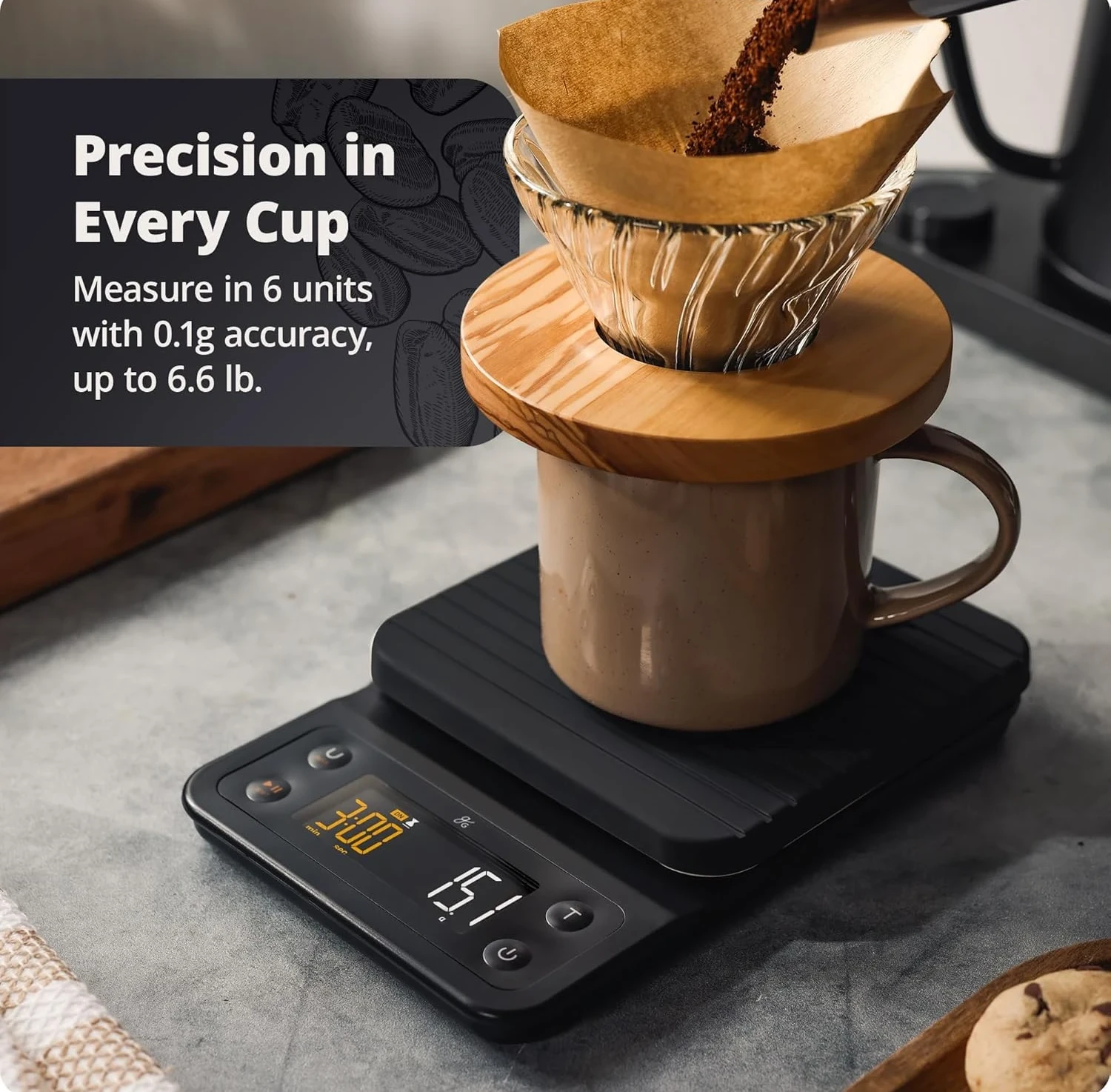
You don’t need to buy an expensive or specialty coffee scale. What works best for me is a simple digital scale accurate to at least 0.1g. The features I find most helpful are:
- Grams (g) measurement for both coffee and water.
- A clear, fast, easy to read display.
- A tare (zero) button to cancel out the weight of the vessel.
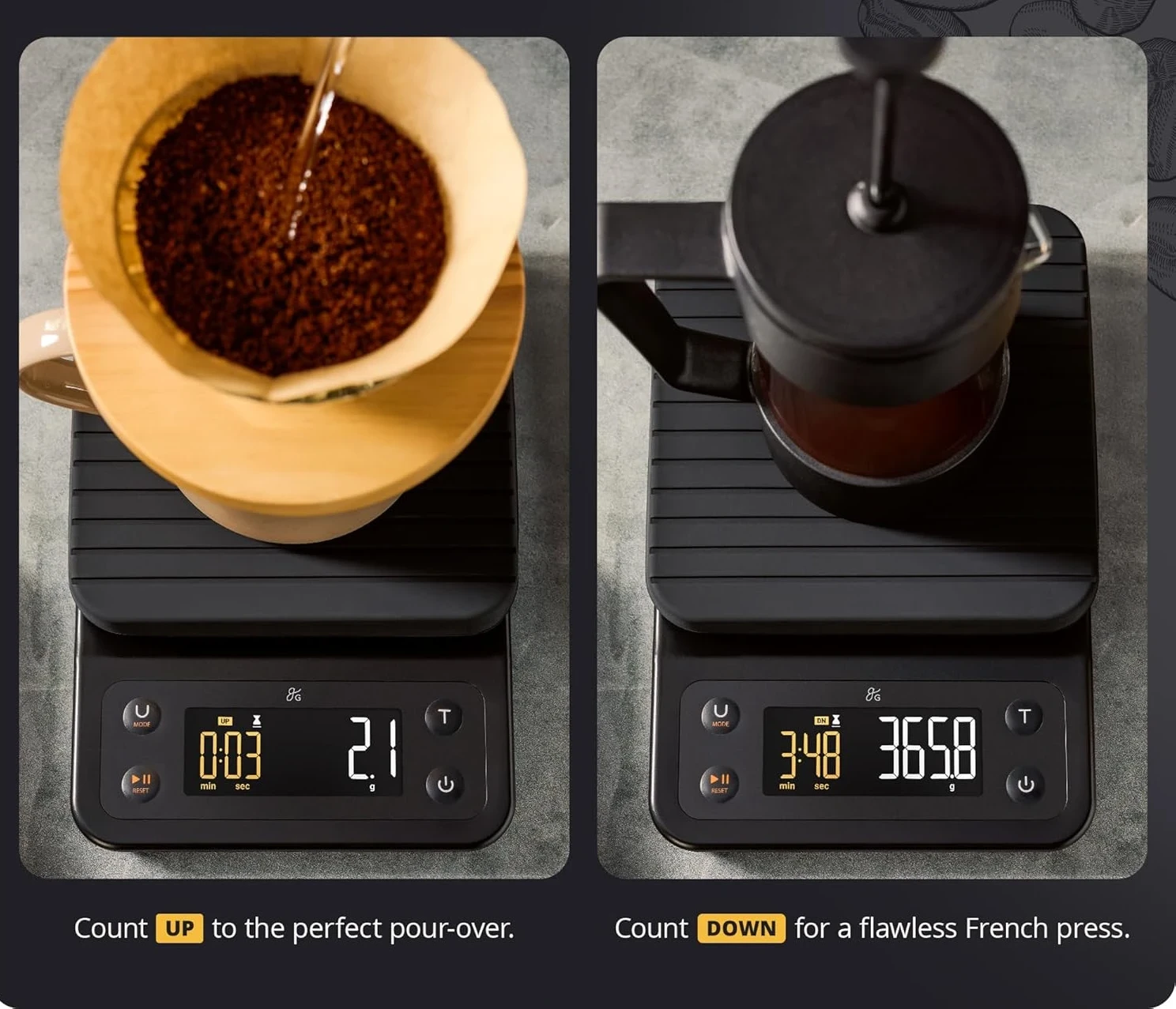
- Optional: A built in timer, useful for pourover or French press methods but not essential.
Reliable options often cost less than a bag of specialty beans. Buying a scale has been one of the most effective upgrade I’ve made. It was more helpful than my expensive grinder ever was for improving daily results. There’s no need to overthink it—pick a basic, precise scale and start enjoying better coffee fast.
Simple Step by Step Process: Brewing With a Scale
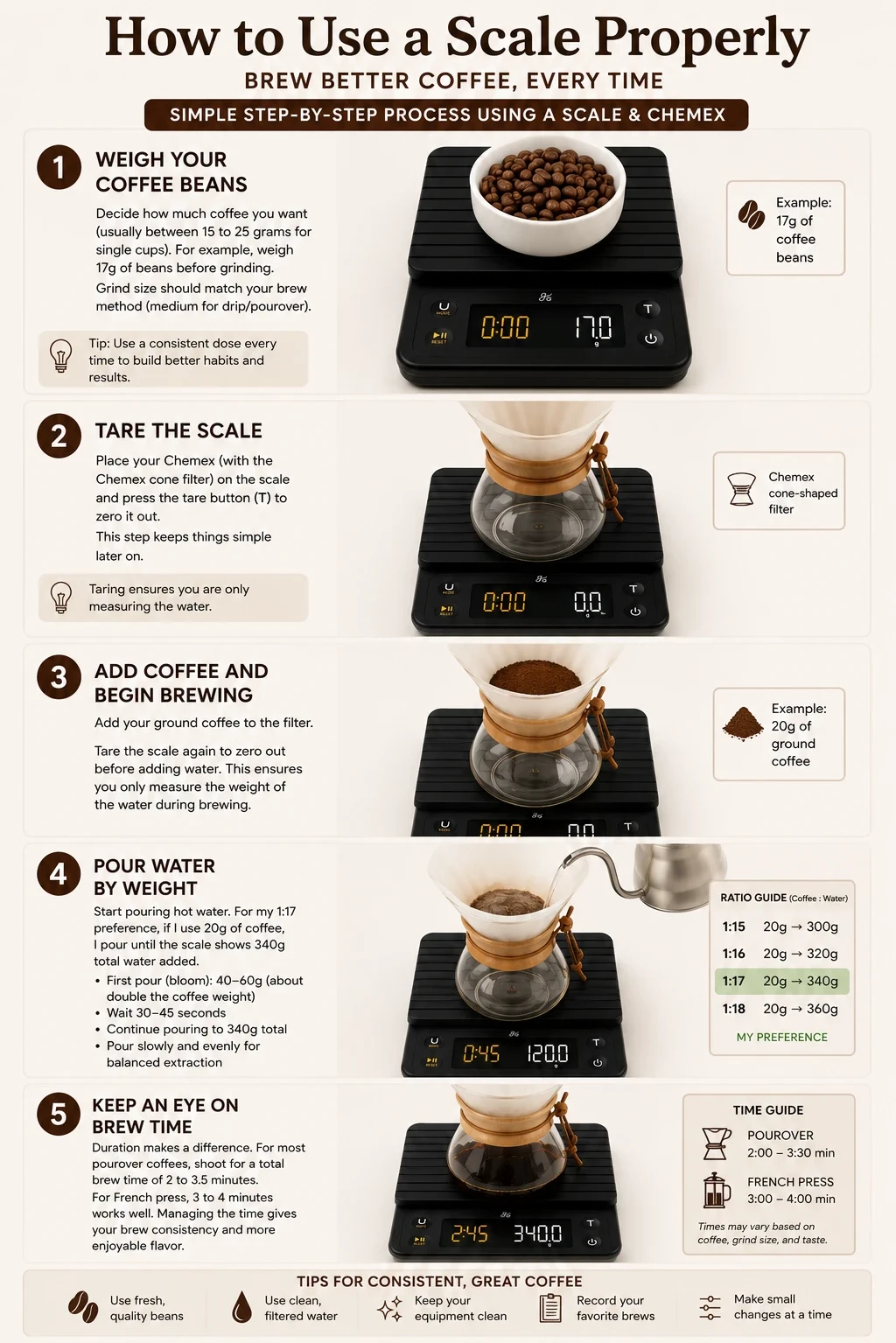
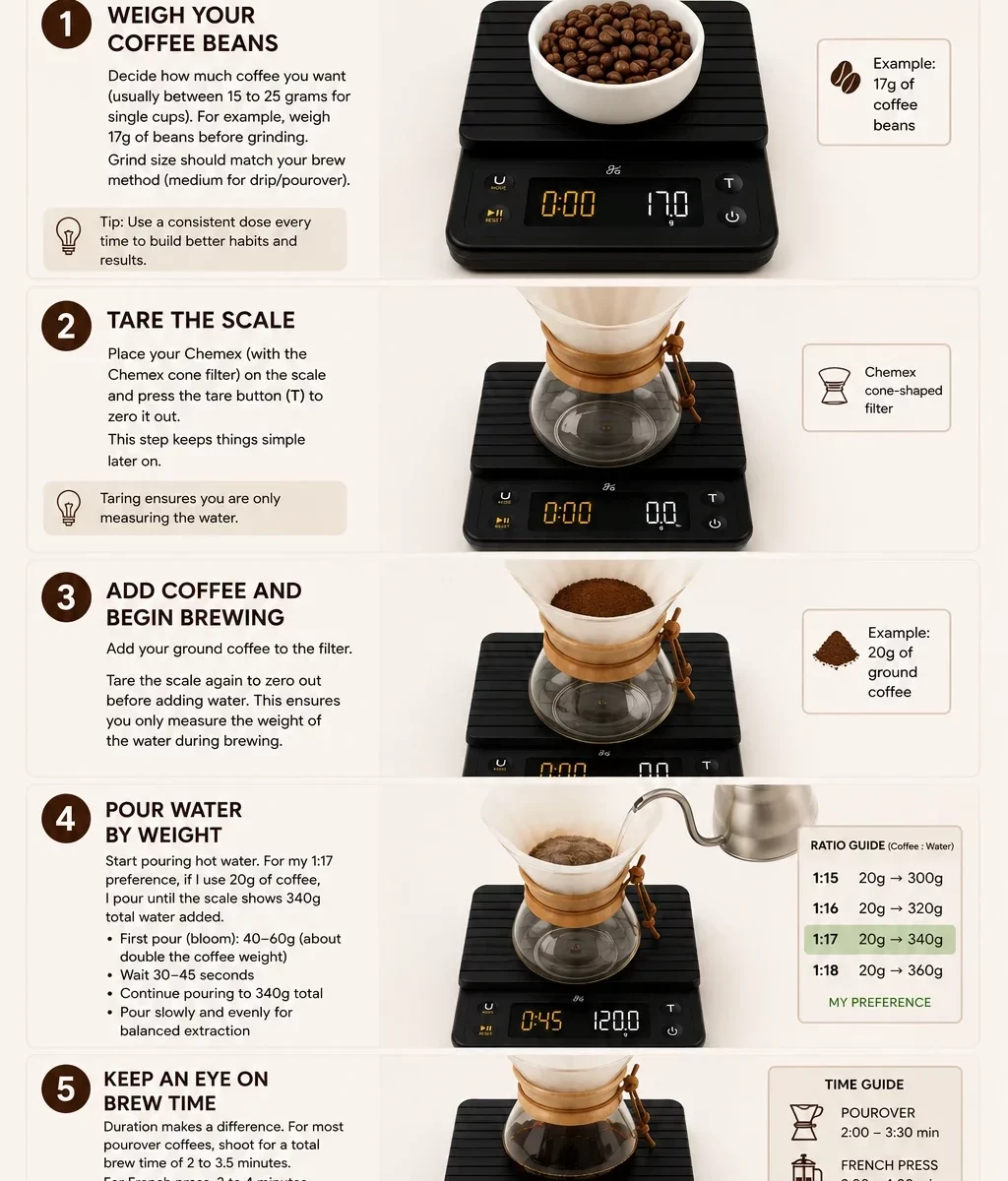
1. Weigh Your Coffee Beans
Decide how much coffee you want (usually between 15 to 25 grams for single cups). For 17g coffee, weigh beans before grinding. Grind size should match your brew method (medium coarse for French press, medium for drip or pourover, fine for espresso).
2. Tare the Scale
Place your brewer or carafe (like a Chemex, French press, or pourover dripper) on the scale and hit the tare button to zero it out. This step keeps things simple later on.
3. Add Coffee and Begin Brewing
Once ground, add coffee to your filter or brewer. Tare again if needed. This helps you make sure only the weight of the water is measured during brewing.
4. Pour Water by Weight
Start pouring hot water, aiming for your desired brew ratio. For my 1:17 preference, if I use 20g of coffee, I pour until the scale shows 340g total water added. The first pour for bloom should be about double the coffee’s weight (for 20g coffee, use 40–60g water), wait 30–45 seconds, then continue pouring. Take your time to pour evenly, so extraction stays balanced.
5. Keep an Eye on Brew Time
Duration makes a difference. For most pourover coffees, shoot for a total brew time of 2 to 3.5 minutes. For French press, 3 to 4 minutes works well. Many scales have a timer, or you can use your phone to keep track. Managing the time gives your brew consistency and more enjoyable flavor.
The High Impact Basics: 80/20 Rule Applied to Coffee
The biggest improvements I’ve made in my coffee routine came from focusing on a few basics, not buying expensive tools. Here’s what I believe makes the biggest difference:
- Fresh coffee beans
- Correct grind size for your method
- Accurate coffeetowater ratio
- Clean, good tasting water
- Brewing with a scale for repeatable results
Measuring accurately is part of that high impact group. Getting those parts right does much more to improve coffee than almost anything else. I’d suggest anyone start here before chasing other gear. If you get these basics right, your coffee will already be ahead of most home brewers.
Beginner Brewing Mistakes (And How to Avoid Them)
I’ve made most of these mistakes myself. Here are some common pitfalls, and how a scale helps avoid them:
- Using scoops instead of weighing grounds
- Ignoring proper brew ratios
- Not measuring water weight
- Changing several variables at once (beans, grind, ratio) so you can’t tell what made the coffee better or worse
- Believing stronger coffee means only adding more grounds. The right ratio is key
- Investing in expensive gadgets without getting the basics right first
Focusing on weighing both coffee and water is an easy fix for a lot of these beginner errors. A coffee scale helps track down exactly what needs adjusting for better results.
Quick Troubleshooting and Common Questions
What if My Coffee Still Tastes Off?
If you measure carefully and still find your coffee weak or bitter, try adjusting the ratio slightly. Use a 1:16 or even 1:15 for a bolder cup, or stretch toward 1:18 for something lighter. Small adjustments make a big impact. Taste and experiment until you hit the cup you like best.
Do I Need to Buy an Expensive Scale?
No. Any kitchen scale that measures in grams and has a tare button works fine. The biggest difference is that some have built-in timers, but I haven’t found it necessary for most everyday brewing. Choose what fits your budget and needs.
Can I Use a Scale With Any Coffee Maker?
Yes. Whether I’m brewing in a French press, pourover, AeroPress, or even a basic drip machine, a scale improves the outcome every time. Just use it to measure both grounds and water, and you’ll see better results.
Taking Your Brew to the Next Level
Measuring coffee and water with a scale has made my morning routine simpler and my coffee much more satisfying. Instead of wondering what I did differently, I can count on a repeatable, tasty cup every day. Brewing great coffee at home isn’t about expensive tools or complicated steps. It comes down to getting the basics right, and a scale is one of the best ways I’ve found to do that. Over time, the small step of using a scale pays off by bringing consistency to every cup you make.
Action Steps for Better Coffee Tomorrow:
- Pick up a kitchen scale that measures in grams and try it out with your morning coffee.
- Start with a 1:17 ratio and write down your results.
- Adjust up or down until you hit the sweet spot for your taste buds, and enjoy your coffee routine a little more each day.
There’s no need for fancy gear or complicated methods. Just keep things simple, measure accurately, and let your coffee shine!
Happy Brewing,
Corey J. Plummer
My List of Recommended Coffee Products
- Burr Grinder – Fellow Burr Grinder
- Gooseneck Kettle – Fellow Stagg EKG Pro Electric Gooseneck Kettle (for controlled pouring)
- Coffee scale – Greater Good Coffee Scale with Timer
- Freshly Roasted Coffee Beans – Onyx Coffee Roasters (honestly anything from them is great)
- Filtered Water System – Apec 5-Stage Reverse Osmosis Water System
- Coffee Water Mineral Packs – Mineral Packs for Brewing Coffee
- Timer – Elegant Digital Kitchen Timer (a smartphone timer works fine too)
Here’s a little transparency: Our website contains affiliate links. This means if you click and make a purchase, we may receive a small commission. Don’t worry, there’s no extra cost to you. It’s a simple way you can support our mission to bring you quality content.